In the first week of June 2022, a 38-year-old software engineer from Jiangxi province bought a train ticket to Zhengzhou. The chapter does not give her name. She was one of roughly 400,000 depositors who had put savings into four rural banks in Henan province and then learned, weeks earlier, that the money was gone.
The banks had frozen withdrawals in April. The explanation they gave was a systems upgrade. The upgrade did not end. By May a different account had surfaced. A major shareholder named Sun Zhenfu had been arrested for serious financial crimes. The deposits, approximately 40 billion renminbi, had been siphoned into real estate speculation and personal enrichment through a web of shell companies. A shell company, in this setting, is a firm that exists on paper so money can move through it without an obvious operating business behind the name.
The four banks the chapter names are Yuzhou Xinminsheng Village Bank, Shangcai Huimin County Bank, Zhecheng Huanghuai Community Bank, and New Oriental Country Bank of Kaifeng. A later passage in the same chapter describes a related structure without folding it into Sun Zhenfu's name. Xincaifu Group Investment Holding Company, controlled by a person named LǬyi, had colluded with bank managers to pull in deposits through third-party online platforms, including Du Xiaoman and JD Finance. The advertised annual return was about 4.6 percent, well above the rates at China's Big Four state banks. The chapter says the funds were not lent out through ordinary banking channels. They were diverted into real estate speculation and questionable asset purchases. Xincaifu had connections with at least 26 rural banks in Henan, not only the four that drew the crowds. The chapter's description of the four banks is that they ran a scheme structurally identical to a peer-to-peer lending model that had just been dismantled.
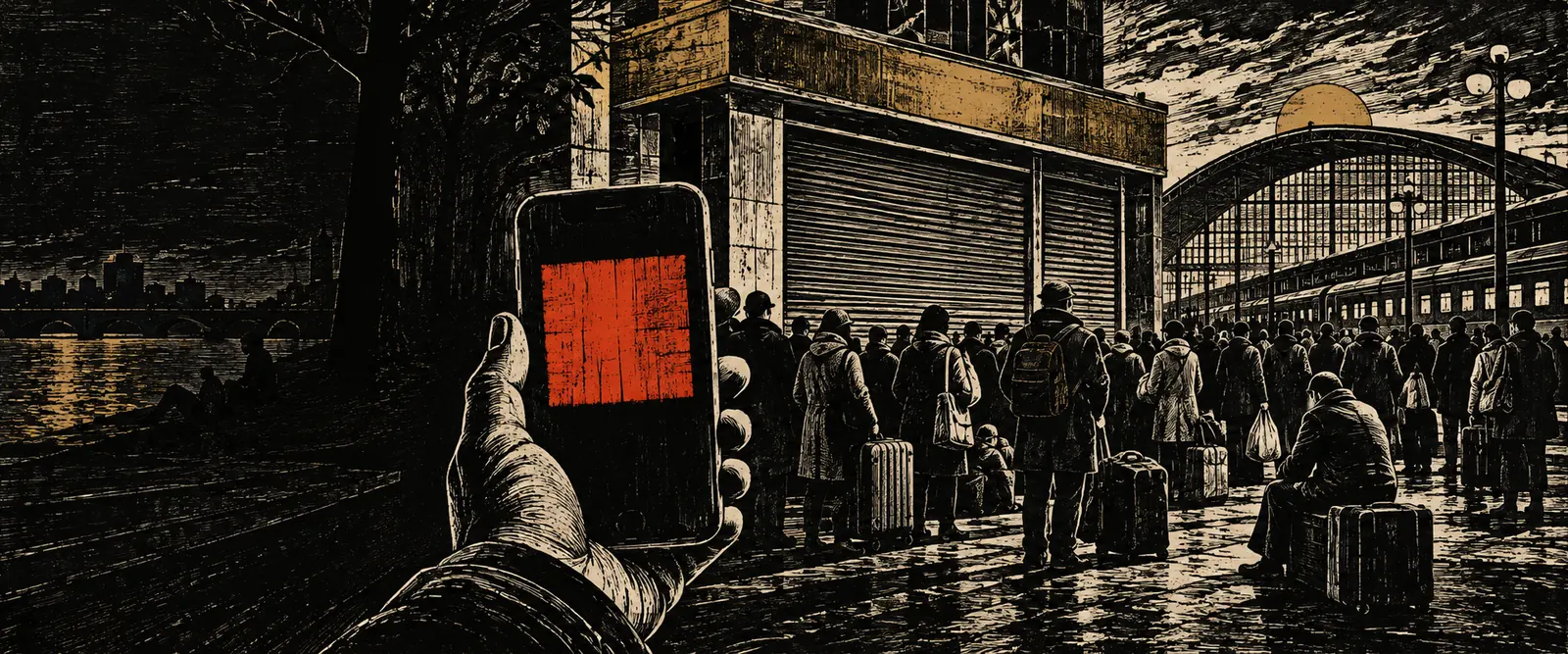
The engineer had tested negative for COVID-19 the night before her trip. Her hometown had no reported infections. Shortly after she bought the ticket, her health code turned red.
In 2022 a health code was the phone pass China used to sort people during the pandemic. Red meant you could not. A red code barred the holder from public transport, restaurants, office buildings, and most indoor spaces. It was the main instrument of what the chapter calls the world's most extensive pandemic surveillance apparatus, and it was supposed to track a virus. In Henan that June it was tracking people who wanted their deposits back. More than 1,300 depositors trying to reach Zhengzhou to protest found their codes flipped to red. They had no COVID-19 exposure, no travel to affected areas, and no medical reason for quarantine.
The engineer is not the only person the chapter puts on the record by a partial name. A 40-year-old employee of a foreign company, surnamed Han, from Suzhou, reported that police approached him after his code turned red and warned him not to travel to Zhengzhou again.
The chapter does not treat the color change as a gray area or as one official freelancing. It says local government officials repurposed a public health system to suppress a financial protest, and that the operation needed coordination across departments: the health-code platform, the public security bureau, the banking regulatory apparatus, and the transportation monitoring system. Getting at depositors' personal data and their travel patterns required that cooperation. The chapter reads the pattern as systematic implementation, not an isolated abuse.
Even state media recoiled. A People's Daily commentary asked, in plain terms, who had come up with the idea of assigning red codes to depositors who were defending legitimate rights, and how an operation so clearly against common sense, the rule of law, and justice could be carried out in a dignified manner. A second commentary warned that officials who turned healthy people's health codes red were crossing a dangerous red line. The party's own paper had called the tactic out.
Investigation eventually confirmed that the decision came from high levels of local government. At least two senior officials were placed under investigation. One of them was Li Huanting, a deputy director of the Henan banking regulator. The chapter separately records that five Zhengzhou officials were ultimately punished. Vincent Brussee, an analyst at the German Mercator Institute for China Studies, called the Henan incident, in the chapter's quotation, "the most brash example of such abuse" of health-tracking systems. The chapter's point in citing him is that the capability remained after the punishments. A surveillance system built for public health could be turned to another use the moment someone with access decided it should be.
The chapter sets the June codes against earlier, smaller warnings that did not stop the banks. In August 2018 the Xuchang branch of the China Banking and Insurance Regulatory Commission fined a related bank 200,000 renminbi for failing to carry out governance responsibilities. Twenty days later the same regulator fined it 300,000 renminbi for concealing the actual use of funds. The chapter calls those penalties mosquito bites. They did not trigger a full investigation of the wider network of banks later exposed as compromised. Local officials, on the chapter's account, tolerated irregular operations because shutting them down would have cut the local credit supply during a contraction. The property downturn had begun in 2021. Henan's smaller cities were exposed. Prices fell to levels not seen since 2018. New construction stalled. Rural banks that could attract deposits from outside the province looked, in that setting, like a lifeline of credit, however fraudulent the books were.
The money did not come back all at once, and it did not come back to everyone. The compensation process that began in July 2022 moved in steps the chapter says were calibrated more to political management than to financial justice. Depositors with up to 50,000 renminbi were reimbursed first. The ceiling rose from there: 100,000 in late July, 150,000 a week later, and 250,000 by early August. A distinction then split the depositors. Regulators argued that funds brought in through online third-party platforms were "wealth investment products" rather than ordinary deposits, which could put large depositors outside insurance coverage. By September 2022, approximately 1,300 depositors had received nothing. Roughly 13 billion renminbi was still frozen.
Comments
Reader notes
Comments aren't live yet. Send notes to @slop_dealer.