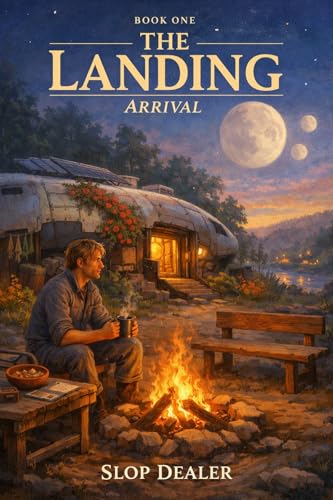
Plain version
In Kethan Valley, crops and wild growth register shifts long before a machine catches them.
Spoiler-free: this covers the premise, not the plot.
A plant can be an instrument
Some tools in The Landing are alive. A leaf glows along its veins. A houseplant works as a night light. Grass leans toward a wind nobody can feel.
It gives the valley a readable surface. People don't wait for a scanner to beep; they watch gardens, banks, and furrows for the first sign that something is off.
Food shapes the valley
The land isn't just scenery. Grain, tubers, beans, greens, fish, honey insects, storage, and winter access dictate every risk.
A blocked road isn't an abstract travel hitch. It decides who eats, who gets medicine, and who has enough margin to help a stranger.
Ecology keeps the magic grounded
The field works on plants, animals, materials, and people alike. Magic feels less like ammunition and more like an ecosystem.
The payoff is a world where quiet details matter: a glowing leaf, a warped furrow, or a warm room held together by craft and close attention.
Comments
Reader notes
Comments aren't live yet. For now, send notes to @slop_dealer.